Videos de Productos

Lo que debe saber sobre nuestros neumáticos EWRS-AT

Landing Page icon 2 - White Rendimiento en lodo y terrenos irregulares


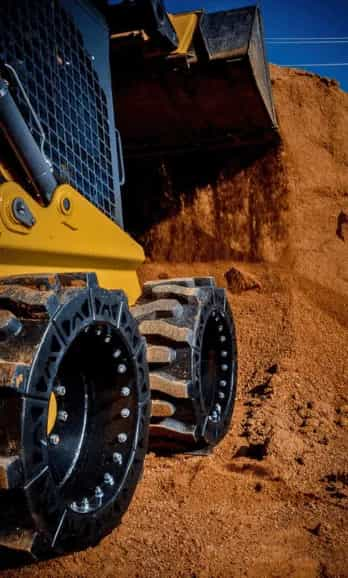
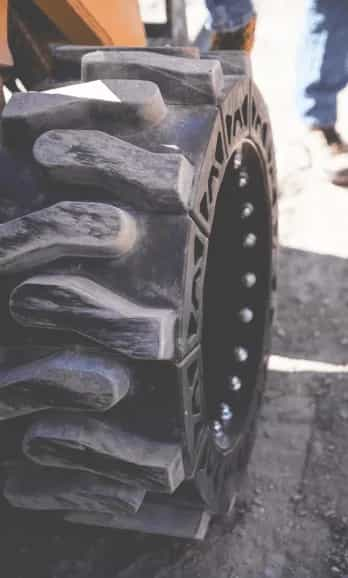
Gracias a sus tacos de tracción más grandes, ofrece una tracción excepcional y una larga vida útil. En comparación con los neumáticos estándar para minicargadores, su diseño único con menos tacos pero de mayor tamaño permite una evacuación eficiente del material y mayor durabilidad.

Untitled design (15) - White Ingeniería de primer nivel y manejo suave

Trabajamos arduamente para ofrecerle un compuesto de caucho exclusivo que permite la compresión suficiente para reducir la fatiga del operador y soportar cargas pesadas. Solo un compuesto de calidad superior sirve para un producto de primer nivel, ese es el estándar de Evolution Wheel. 

Cómo funciona el EWRS-AT

Testimonios de clientes

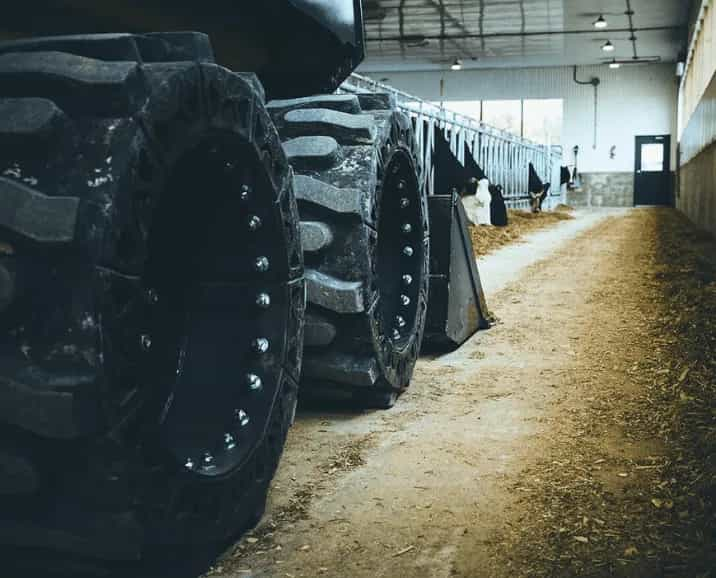
"Es realmente impresionante": Un ganadero habla sobre los neumáticos macizos para minicargador EWRS-AT de Evolution Wheel

En este video, conversamos con Tate Ryan para ver cómo la serie EWRS-AT de neumáticos macizos para minicargador de Evolution Wheel ha impactado en su operación. Descubra por qué está impresionado y considera que nuestros neumáticos macizos son "insuperables".

Satisfaga las necesidades de las obras actuales

Landing Page icon 1 - White Fácil mantenimiento

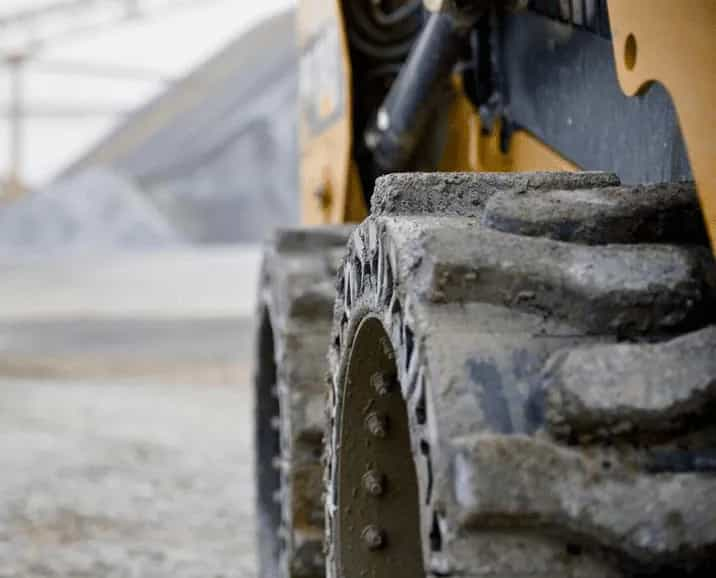
Evolution Wheel revolucionó el mantenimiento de neumáticos para minicargadores. A diferencia de los neumáticos tradicionales, los neumáticos segmentados no requieren un camión de servicio ni técnicos especializados. Con herramientas básicas disponibles en la obra y repuestos de fácil acceso, la reparación se realiza rápidamente, garantizando un tiempo de inactividad mínimo. 

Construction Guy Icon-white Durabilidad y comodidad incomparables 

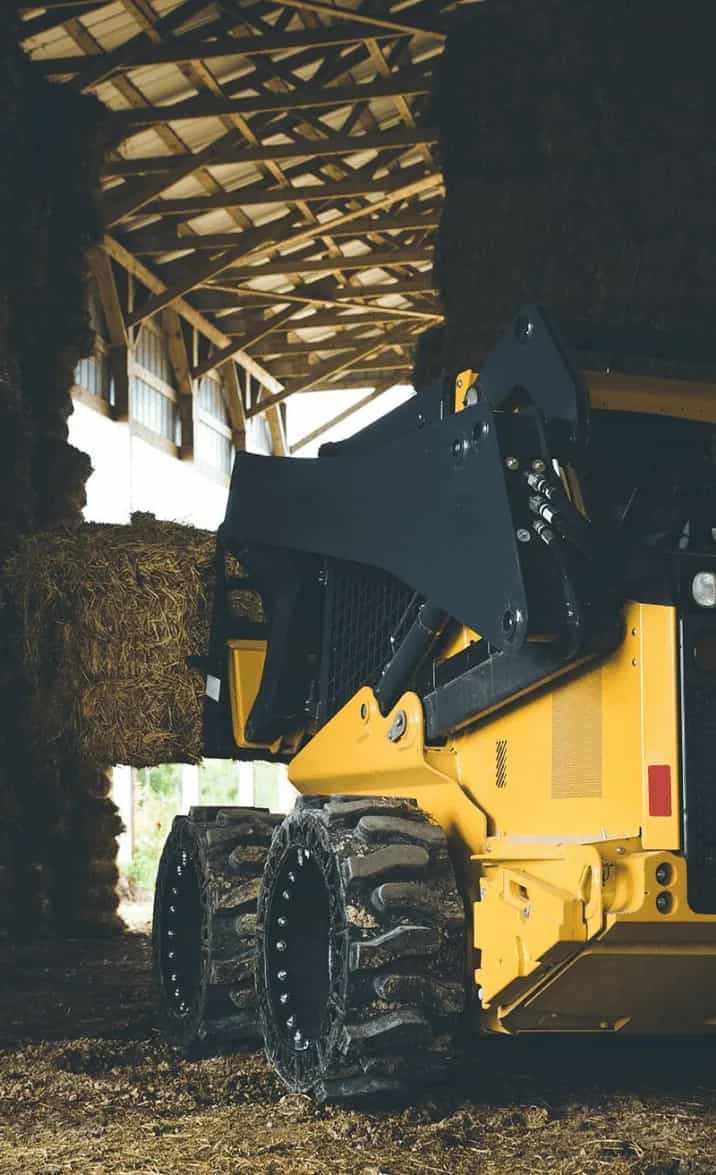
Cada neumático para minicargador de Evolution Wheel está fabricado con la máxima atención al detalle. A pesar de las cargas pesadas, nuestro diseño innovador ofrece un manejo suave, lo que reduce la fatiga del operador y mejora el confort. 
Dimensiones del neumático

Medida del Neumático
10x16.5
(31x10-20)
Diámetro Exterior
In (mm)
31.5
(800)
Ancho
In (mm)
10
(254)
Diámetro del Rin
In (mm)
20.5
(521)
Profundidad Útil de Rodadura
In (mm)
48/32nd
(38)
Peso
Lb (kg)
200
(91)
Capacidad Máx. de Carga
Lb (kg)
4,710
(2,136)
Medida del Neumático
12x16.5
(33x12-20)
Diámetro Exterior
In (mm)
32.5
(826)
Ancho
In (mm)
12
(305)
Diámetro del Rin
In (mm)
20.5
(521)
Profundidad Útil de Rodadura
In (mm)
52/32nd
(42)
Peso
Lb (kg)
220
(100)
Capacidad Máx. de Carga
Lb (kg)
6,780
(3,075)
Medida del Neumático
14x17.5
(36x14-24)
Diámetro Exterior
In (mm)
36
(915)
Ancho
In (mm)
14
(356)
Diámetro del Rin
In (mm)
24
(610)
Profundidad Útil de Rodadura
In (mm)
52/32nd
(42)
Peso
Lb (kg)
360
(163)
Capacidad Máx. de Carga
Lb (kg)
8,540
(3,874)

Medidas de neumáticos macizos para minicargador

DESCARGAR FICHA

Vea el EWRS-AT

en las máquinas de los clientes

Vea más videos sobre

cómo se desempeña el EWRS-AT

Proper Tread Direction for All Terrain Solid Skid Steer Tires

Dirección correcta de la banda de rodadura en neumáticos macizos todo terreno para minicargador

Es importante saber si los neumáticos de su equipo son unidireccionales. En este video, explicaremos qué significa exactamente eso y por qué es importante al montar sus neumáticos macizos EWRS-AT para minicargador.
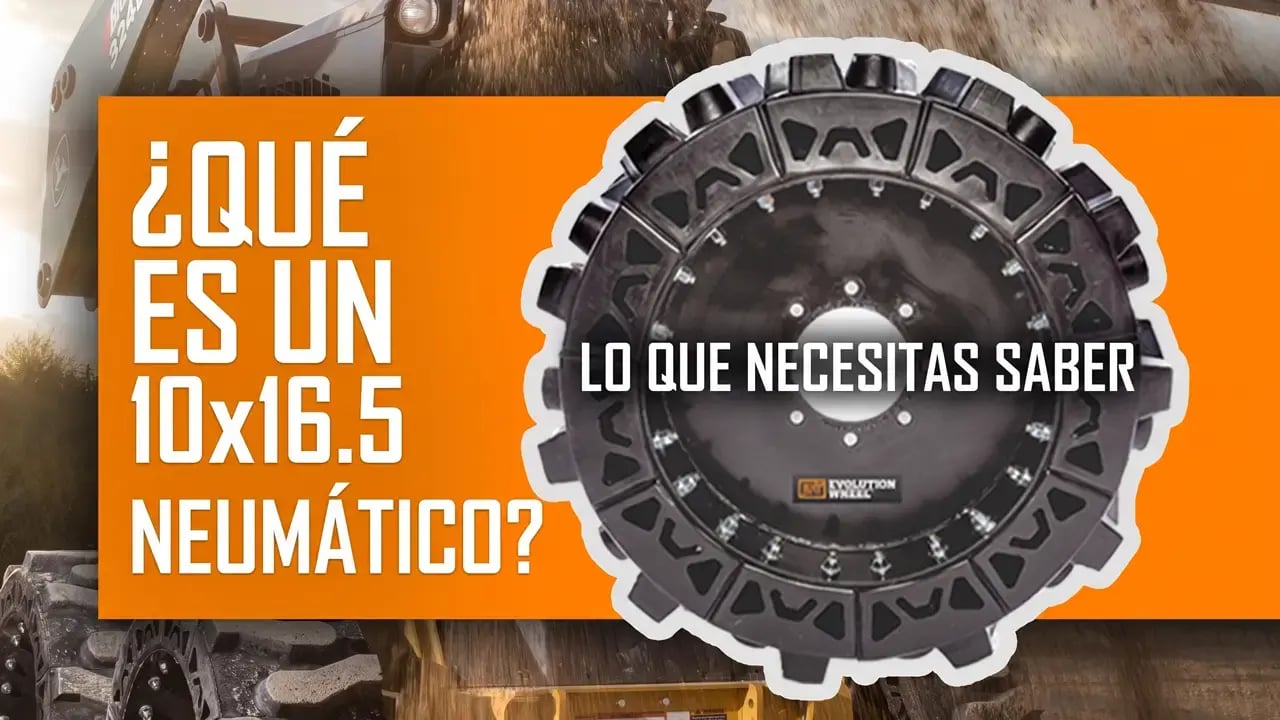
What Is a 10x16.5 Size Tire Solid Skid Steer Tires vs Pneumatic

¿Qué es un neumático medida 10x16.5? Neumáticos macizos para minicargador vs. neumáticos de aire

En este video, explicamos qué es exactamente un neumático de medida 10x16.5 y a qué especificaciones debe prestar atención al comprar su próximo juego de neumáticos macizos.
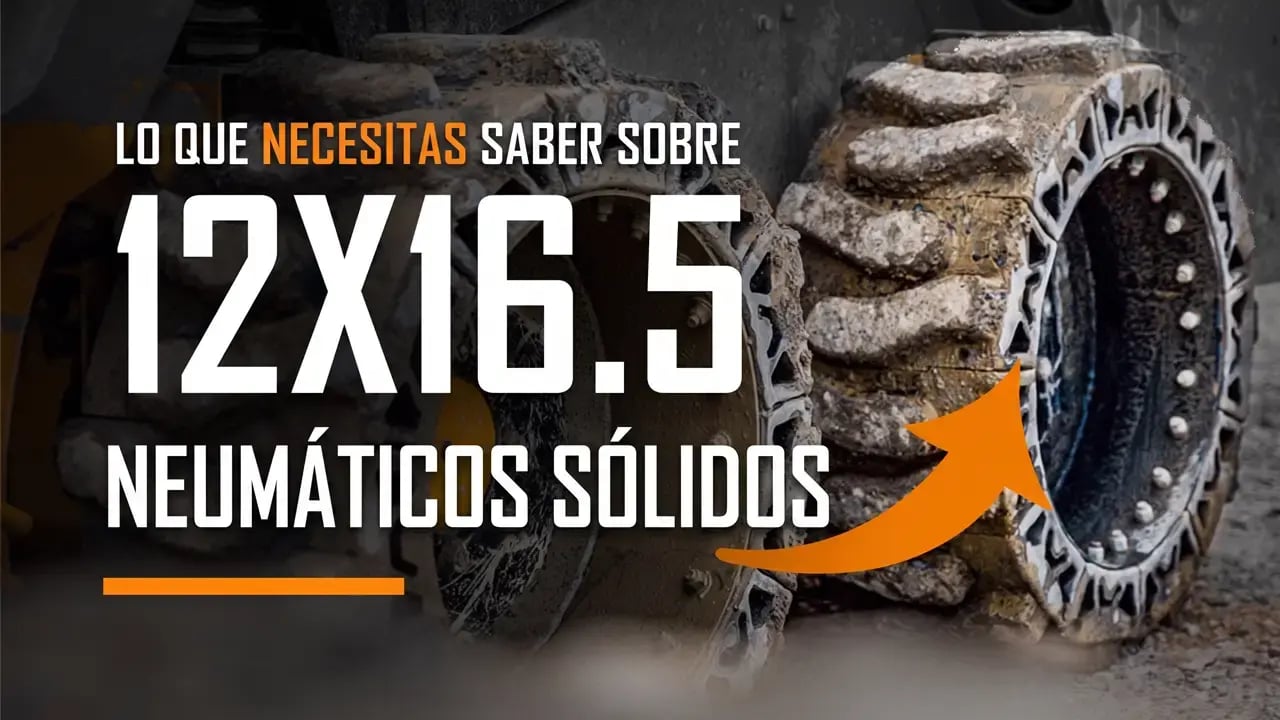
What you NEED to know about 12x16.5 SOLID Tires | Skid Steer Solid Tires

Lo que DEBE saber sobre los neumáticos MACIZOS 12x16.5 | Neumáticos macizos para minicargador

En este video, explicamos qué necesita saber exactamente al buscar neumáticos macizos 12x16.5 y a qué especificaciones debe prestar atención.
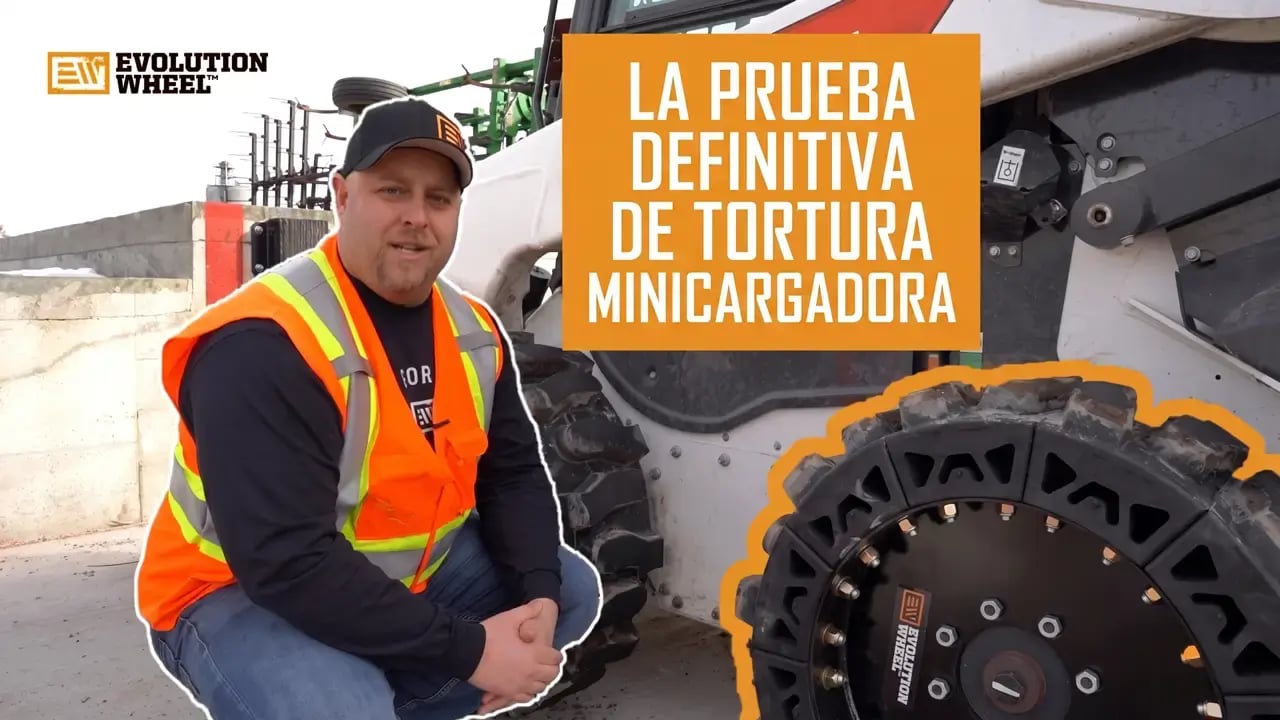
Solid Skid Steer Tire - Burnout Test

Neumáticos macizos para minicargador: Prueba de desgaste por fricción

En este video, Derek Hird describe la prueba de desgaste por fricción que realiza Evolution Wheel al evaluar la resistencia a cortes y desprendimientos de los compuestos de caucho en sus neumáticos macizos para minicargador.

Cost Breakdown Calculation for Skid Steer Tires

When purchasing equipment for your job site, cost-effectiveness is a main factor if not your number one factor. You not only want a reliable and durable product but also one that won't break the bank. When purchasing skid steer tires, a product with lower up-front costs often seems to be the obvious solution, yet other factors come into play that often lead to higher overall costs in the end.

If you assume that quality levels don’t vary significantly from product to product, or from brand to brand, it would make sense to go with the cheaper option. This way of thinking often leads to purchasing traditional air-filled skid steer tires for your skid steers. You may see the higher price tag of solid skid steer tires and figure that the air-filled tires are either a better value or will work just the same as solid skid steer tires.

But how much do those cheaper skid steer tires cost in the long run? After all, the up-front purchase price is only a small part of the big picture regarding the cost consideration equation. Other factors to consider are the cost of maintaining, repairing, and replacing the tires. You should also consider that recent advances in technology have led to a wide variation in the quality of modern skid steer tires, and there are now some significant differences between types and brands of skid steer tires. Although solid skid steer tires have higher upfront costs, their cutting-edge design will save you a lot of money in the long run.

If you’re currently using air-filled tires for your skid steers, consider taking a few minutes to think about the actual cost you’re spending from the initial purchase to the end of life. You might be surprised at how much you’re spending on purchase, repair, replacement, downtime, labor, and other costs associated with air-filled tires.

Here are some factors to consider when doing a complete cost consideration calculation:

  • How many hours do the air-filled skid steer tires last on the machine? Lower-quality tires will wear out more quickly and need to be replaced more often, resulting in a higher overall tire budget. Though individual skid steer tires cost less, the need to purchase many of them adds up.
  • What is the cost of skid steer tires when installation is factored in? Spending man-hours and resources on skid steer tire installation is costly, especially because it must be done more frequently than solid skid steer tires.
  • What is the cost to repair air-filled skid steer tires when they go flat? One of the biggest drawbacks of air-filled tires is that when they’re punctured, they deflate. The tires must be removed and repaired every time this happens before the machine becomes functional again. This process can lead to big costs, as labor and downtime are required to repair. With solid skid steer tires, there are no flats to worry about, and none of the associated expenses or hassles.
  • How much are you spending on downtime during repairs? Consider how many hours are spent dealing with flat tires instead of working on the project you've been hired to do. Using your job's hourly charge-out rate, you can calculate the cost/hour of your tires. The cheaper the tires, the more downtime is required, ultimately costing you money.

Now for comparison, let's look at the average cost/hour from Evolution Wheel's solid tires, across several industries.

Industry

Average Cost/Hour

Rock Quarry

USD 1.16/tire

Demolition

USD 1.30/tire

Waste Transfer Station

USD 1.25/tire

Dairy Farm

USD 0.80/tire

General Agriculture

USD 0.60/tire


The numbers speak for themselves! Buying high-quality skid steer tires results in lower cost/hour. If you want to save money on equipment, well-designed products will ultimately yield greater returns. Although air-filled tires cost less up front, in the long run, solid skid steer tires are well worth the initial higher investment as they save repair, downtime, replacement, and many other costs.

Evolution Wheel provides the highest quality solid skid steer in the industry. Our rugged, versatile skid steer tires are superior in strength and thus get the job done without sacrificing operator comfort. Evolution Wheel’s tires also have a modular design which keeps repair costs to a minimum. Say goodbye to the high cost of flat tires! Check out our full line of products today to find out more about our solid skid steer tires and other tires for your industrial machines!

Learn more about skid steer tires by reading Evolution Wheel blogs and case studies

Blogs

Problems and Solutions for Bobcat Tires - Blog

Bobcat Tire Options - The Breakdown - Blog

Bobcat Tires - The Cost Breakdown Calculation - Blog

Choosing the Right Bobcat Tire for Your Machine - Blog

Tips to Avoid and Fix Bobcat Tires - Blog


Case Study

Rock Quarry - Case Study

Demolition - Case Study