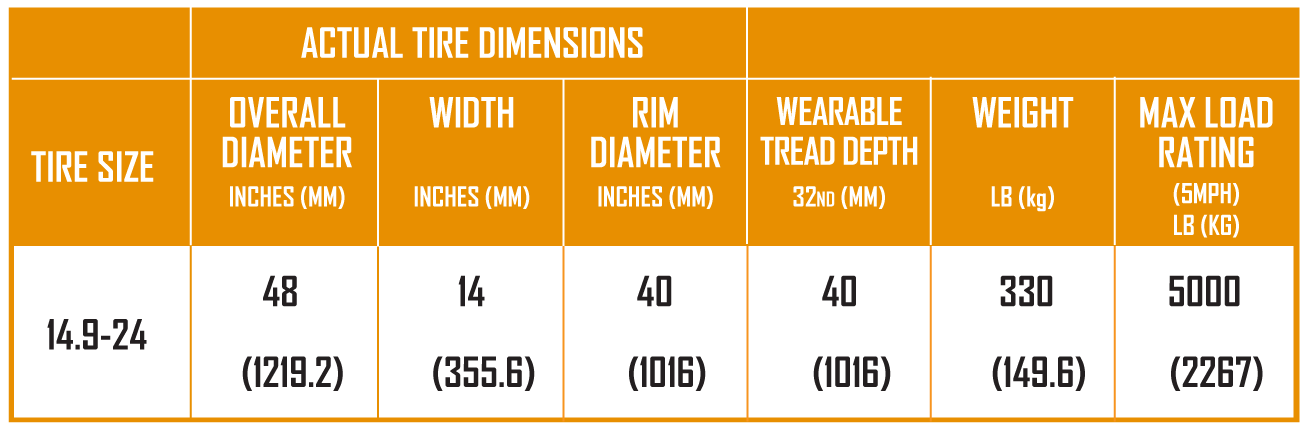
EWRS-PIVOT Core Geometry Vs. 14.9 x 24 Irrigation Tire
What Is Core Geometry
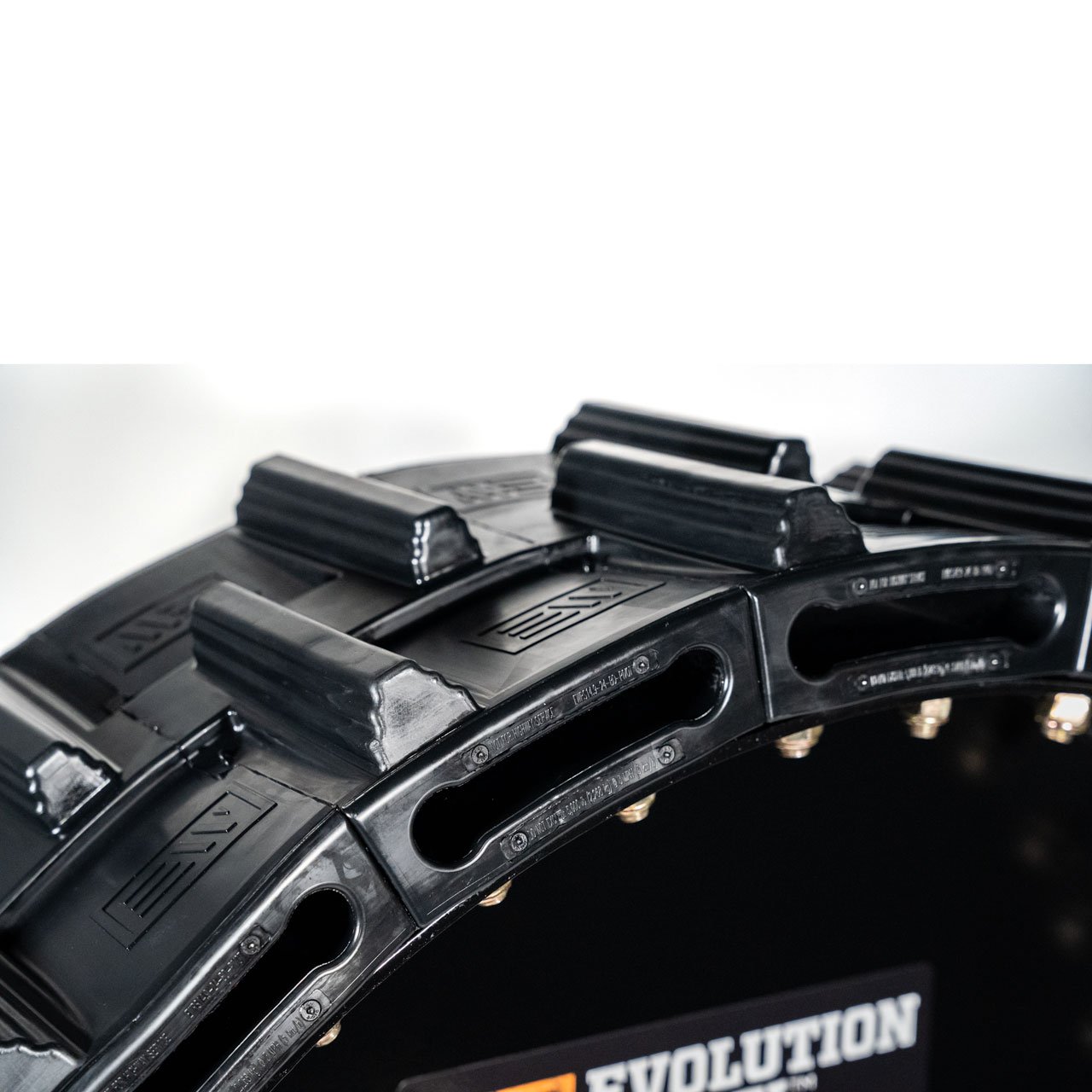
Evolution Wheels airless tires are designed with core geometry to fit specific applications. These cores are open-ended holes in the rubber of the tire that allow it to compress like a pneumatic tire naturally would but without the bounce.
EWRS-PIVOT Irrigation Tire Core Hole Design
Pivot tires operate in extreme conditions. Wet soil, pooled water, and high UV light can deteriorate rubber and cause flats on pneumatic tires long before the tread is worn. Because of this, many farmers have been looking to no flat airless tires to solve their issues with flats, however, the problem with many airless tires is that they lack flexibility which causes damage to the gearbox.
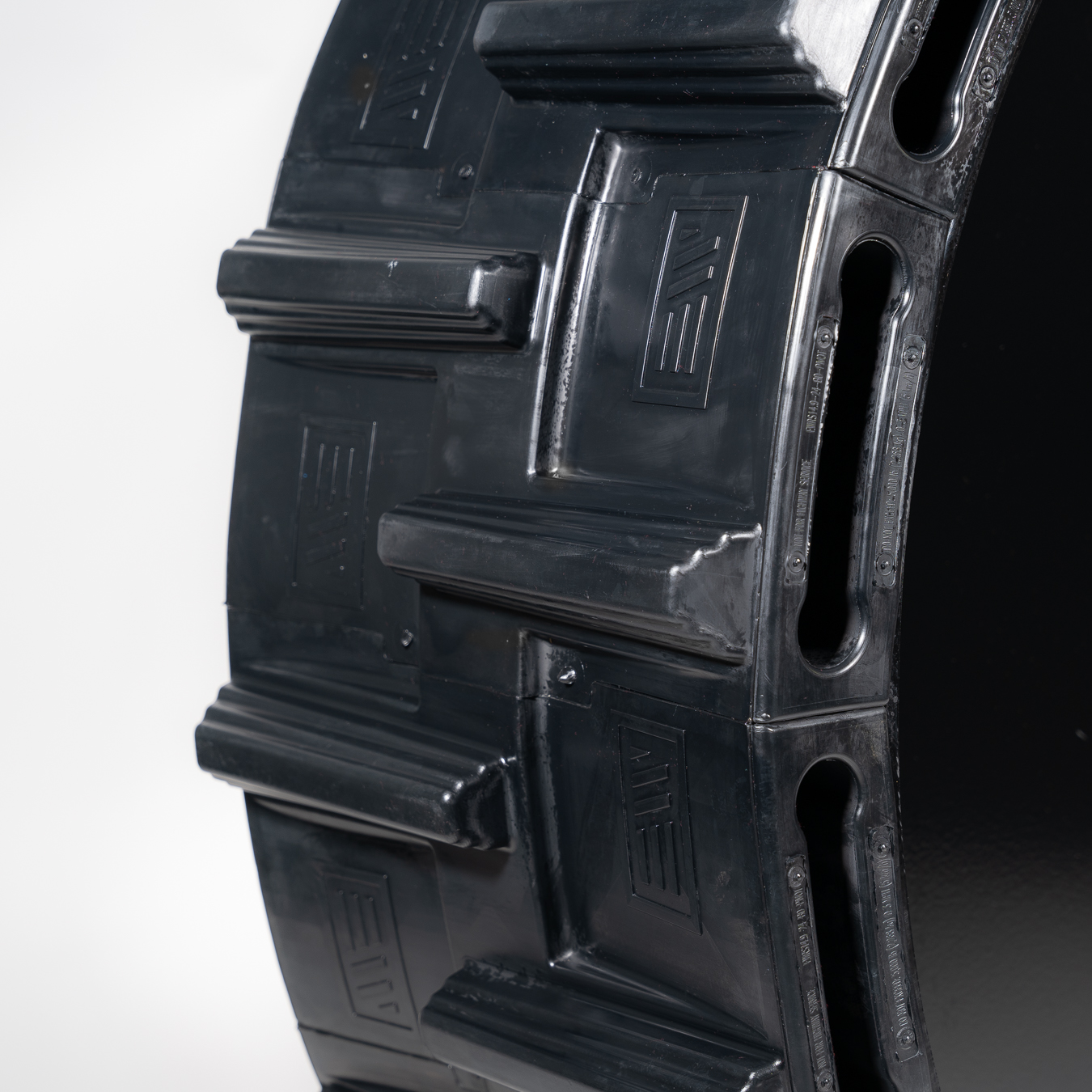
The EWRS-PIVOT is different. Each segment of the tire has unique core geometry designed to compress like a pneumatic to mimic their flexibility without ever going flat. These cores compress completely so that the mud and material that get stuck inside will be squeezed out making it a self-cleaning system.
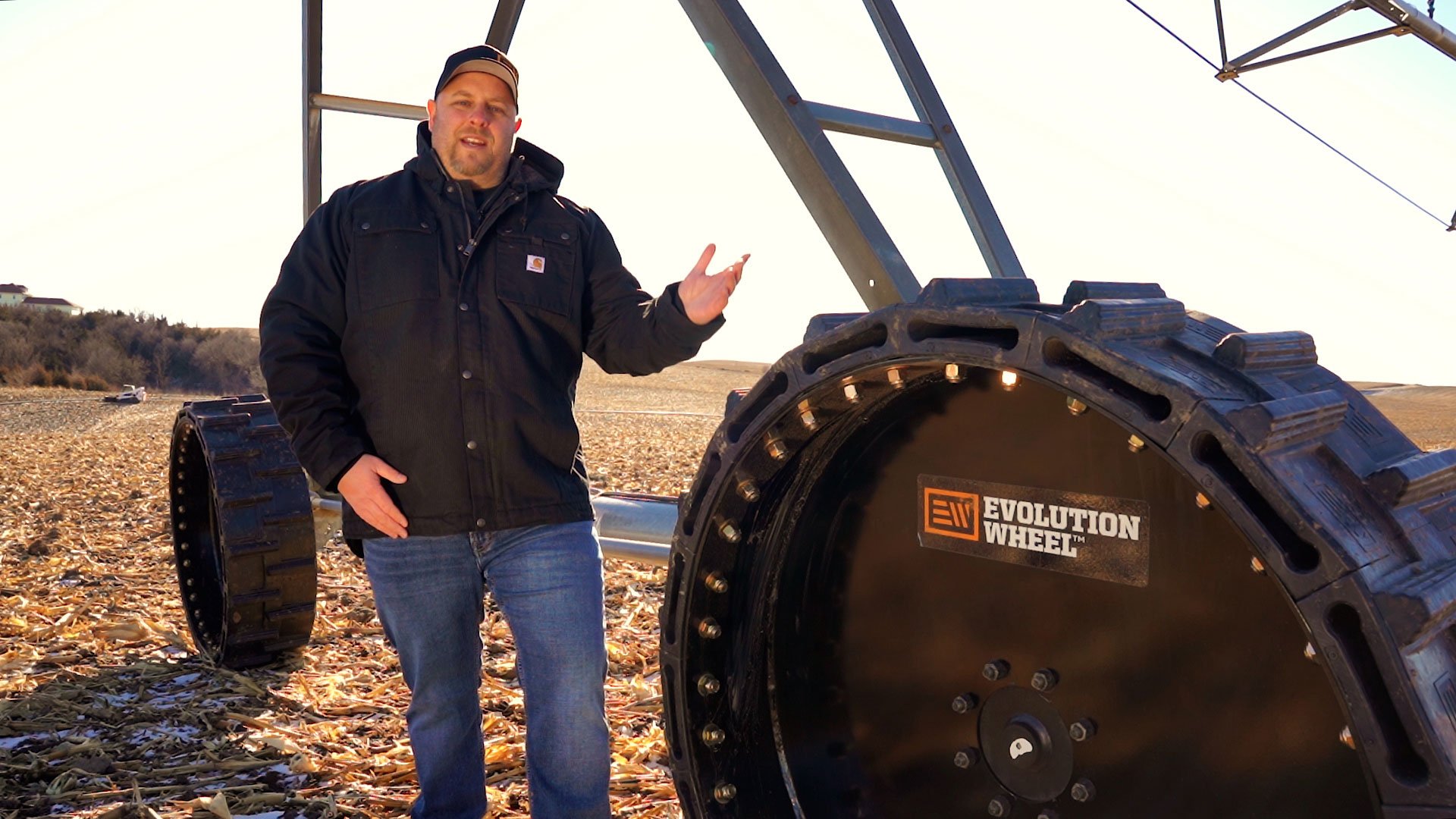
The EWRS-PIVOT series of airless pivot tires from Evolution Wheel offers the most advanced airless technology to the irrigation market. This solution delivers serviceability, traction, and floatation into one impressive offering.
Our tread design and tire profile offer greater traction through mud and obstacles. The unique concave contact face helps eliminate rutting by keeping dirt under the tire, where it belongs. The face of the tire is pointed inwards. Compared to typical pneumatic irrigation tires which convex shape push mud out from under the tire, causing ruts.
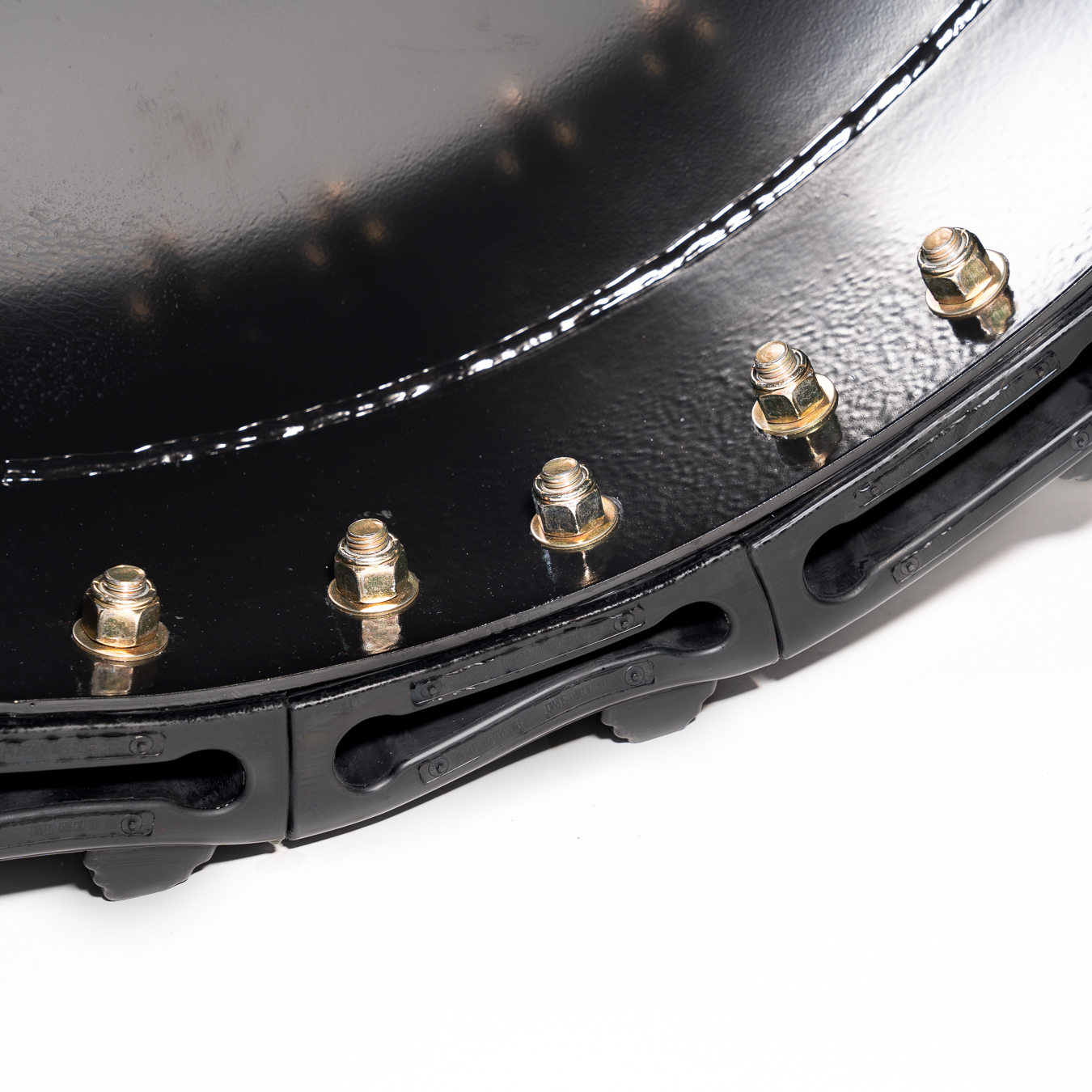
Our proprietary segmented design bolts onto our high strength wheel, allowing you the ability to service the tire quickly, eliminating the need to change a tire in the field.
Unlike other airless pivot tires, the EWRS-PIVOT compresses flat pushing material out, it's a self-cleaning system. The compressed cores elongate the footprint of the tire allowing it to wrap over obstacles increasing traction and reducing ground pressure.