
The Best Airless Tire for a Reinke Alumigator Pivot System
Why should you use the EWRS-PIVOT airless irrigation tire on your Reinke Alumigator pivot system? There are actually 5 reasons. We at Evolution Wheel wanted to design a pivot tire that will solve all the problems farmers encounter with their irrigation tires, so we did.
5 Reasons Why You Should use an EWRS-PIVOT Airless Pivot Tire
- No Flats
- Increased Traction
- Increased Floatation
- Serviceability
- Cost-Effective
No Flats
One of the biggest reasons for downtime on a field sprinkler irrigation system is replacing flat tires. Filling with mud and water, causing stoppages and increased wear on the gearboxes, then having to take the time to go in and replace the tire and repair the damage it caused. Flat tires out in the field are a headache. That’s where EWRS-PIVOT, an airless irrigation tire, is beneficial. Airless irrigation tires are no-flat irrigation tires. No flats mean no punctures or sidewall damage, fewer repairs, less downtime for the system, and higher efficiency overall, saving you money.
Increased Flotation That Prevents Ruts
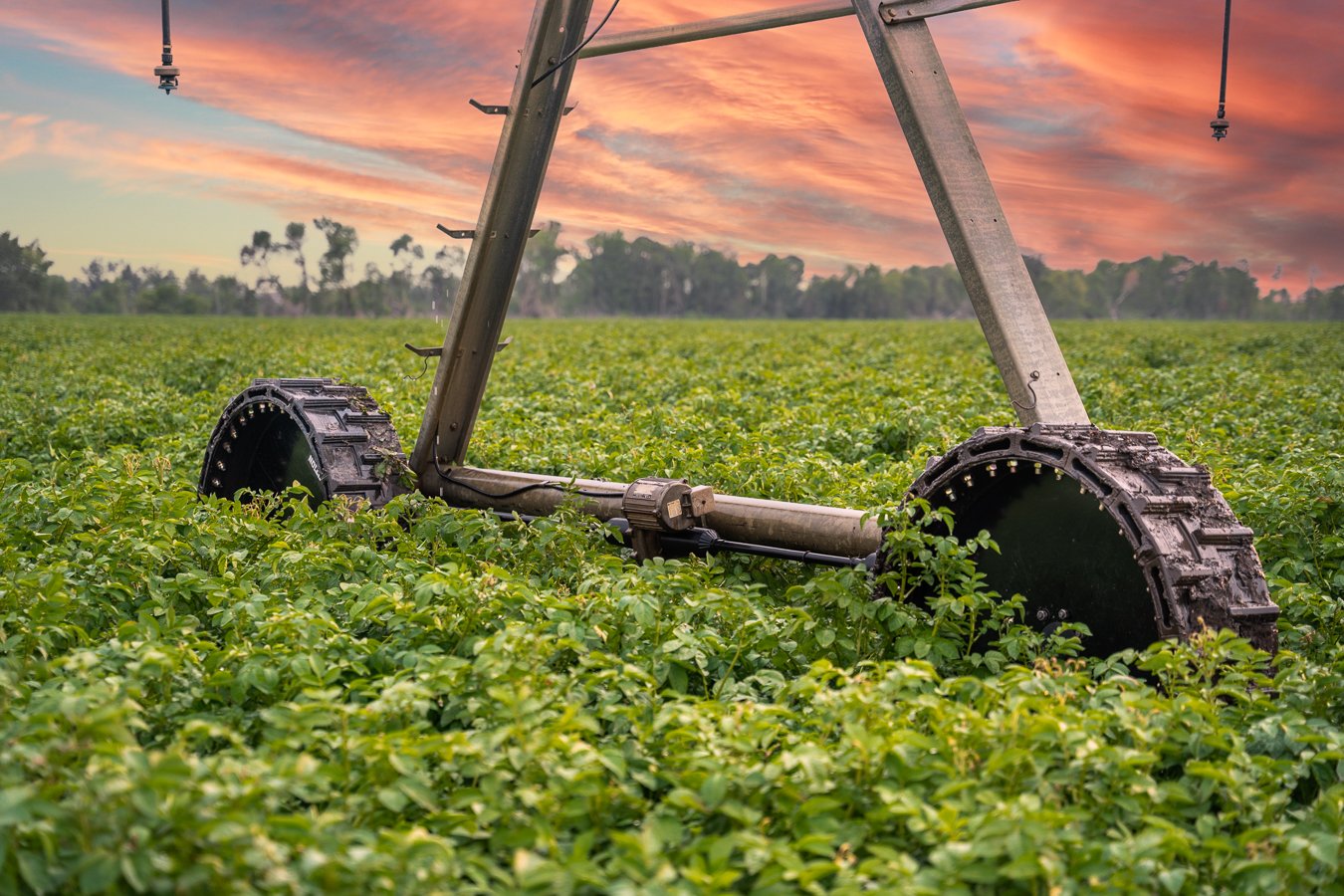
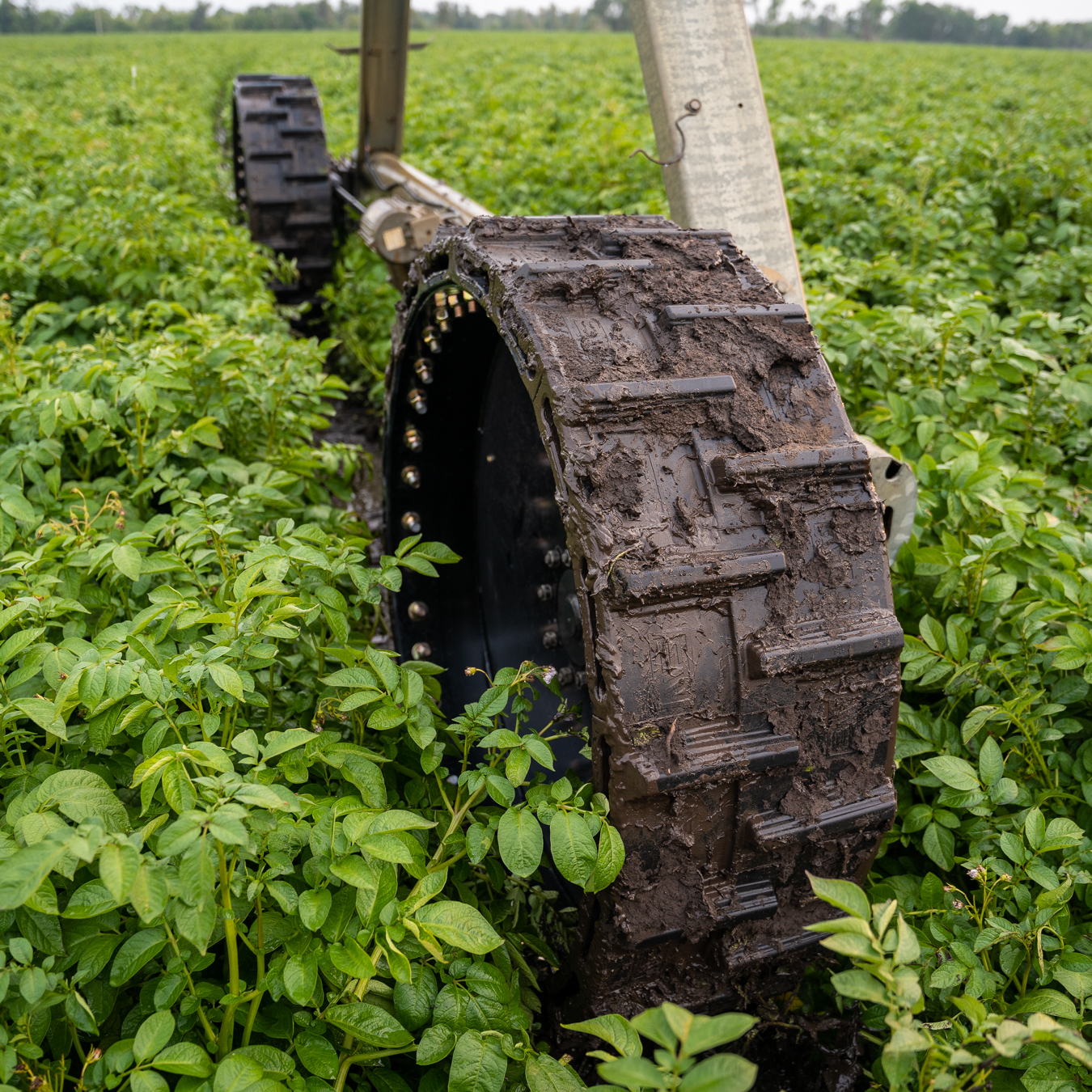
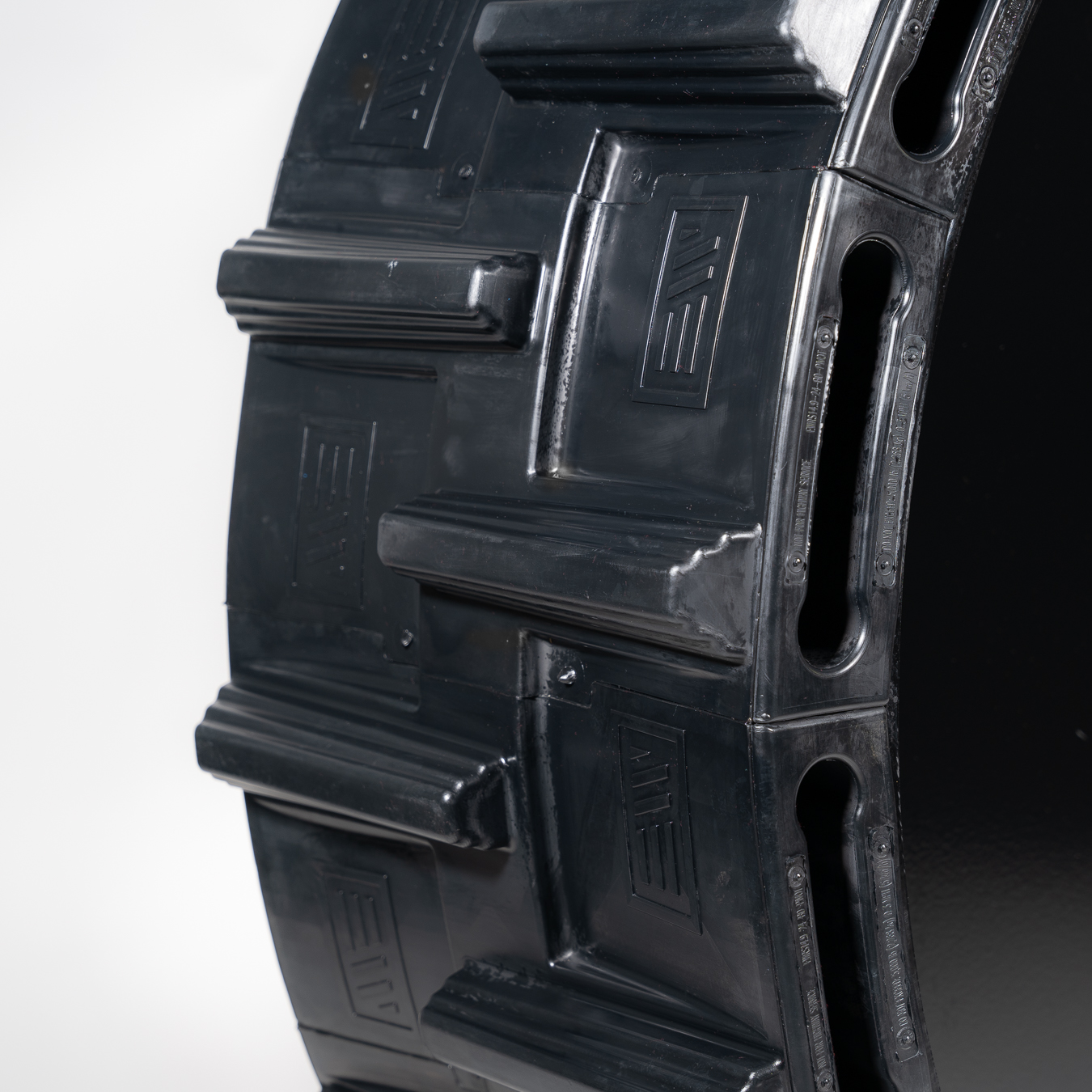
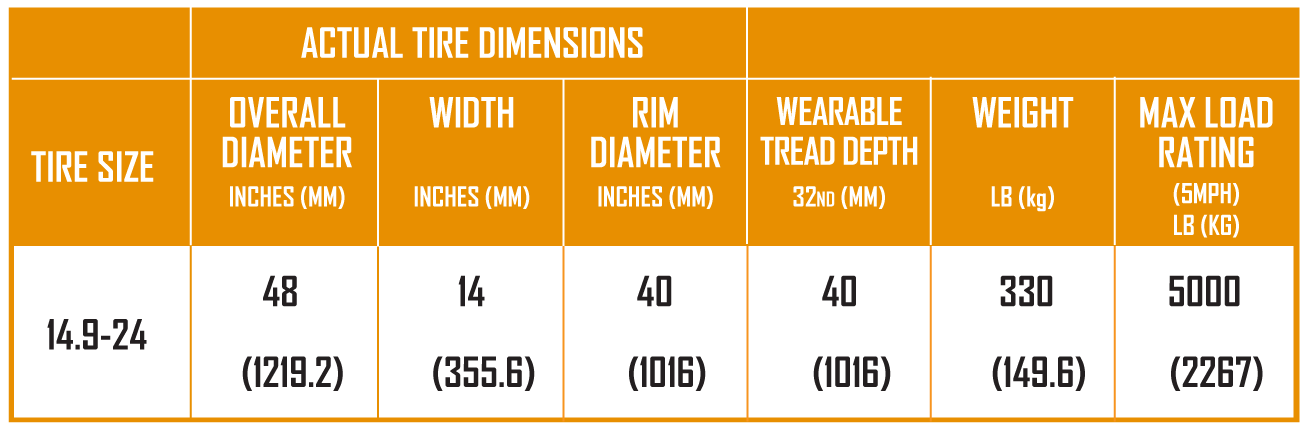
With a bi-directional tread pattern, a concave profile, and true-to-spec 14.9" X 24" dimensions, the EWRS-PIVOT has superior floatation to other pivot tires. The bi-directional tread pattern doesn't push mud away from the tire, the concave profile holds mud underneath the tire, and the 14.9" true to spec width increases ground contact.
Increased Traction
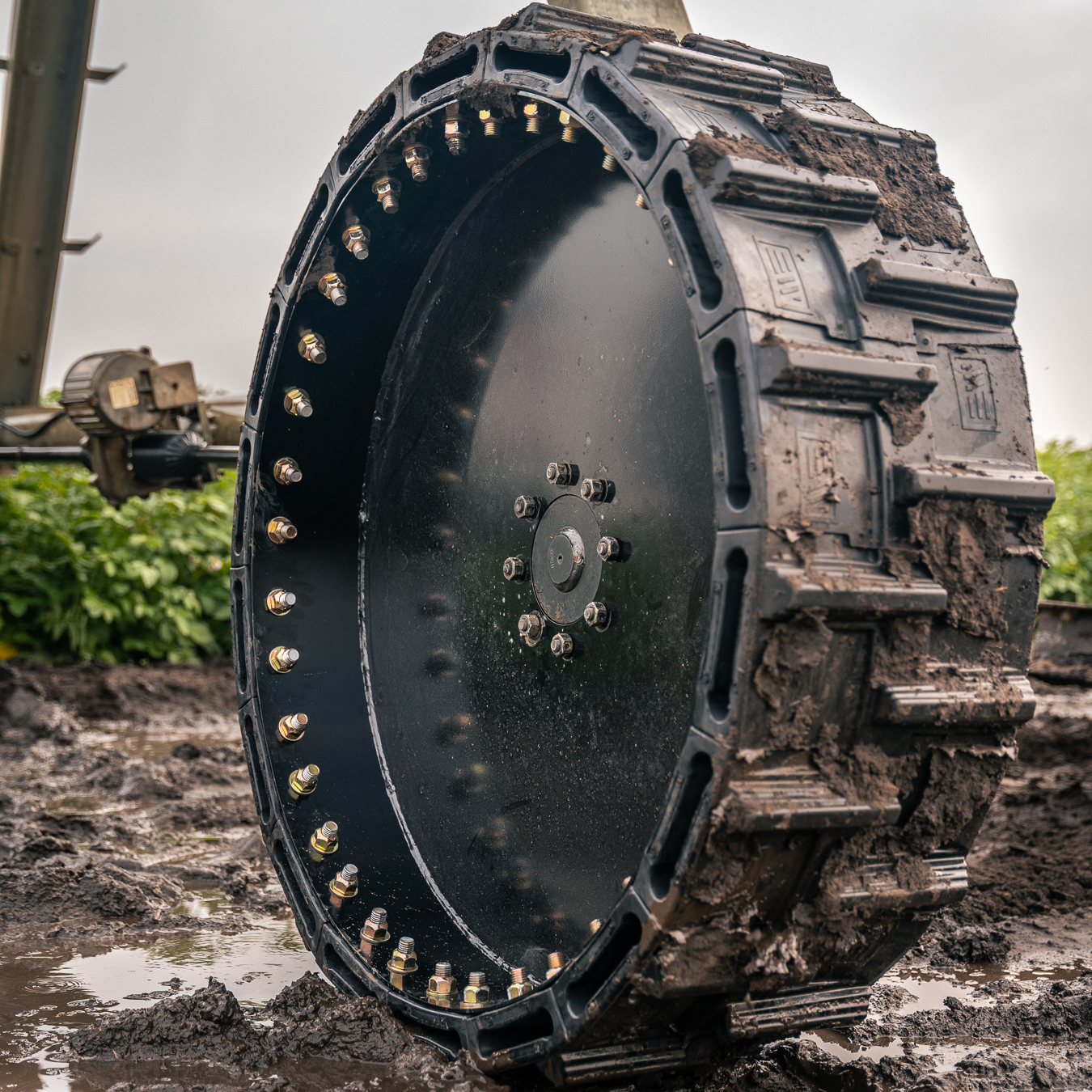
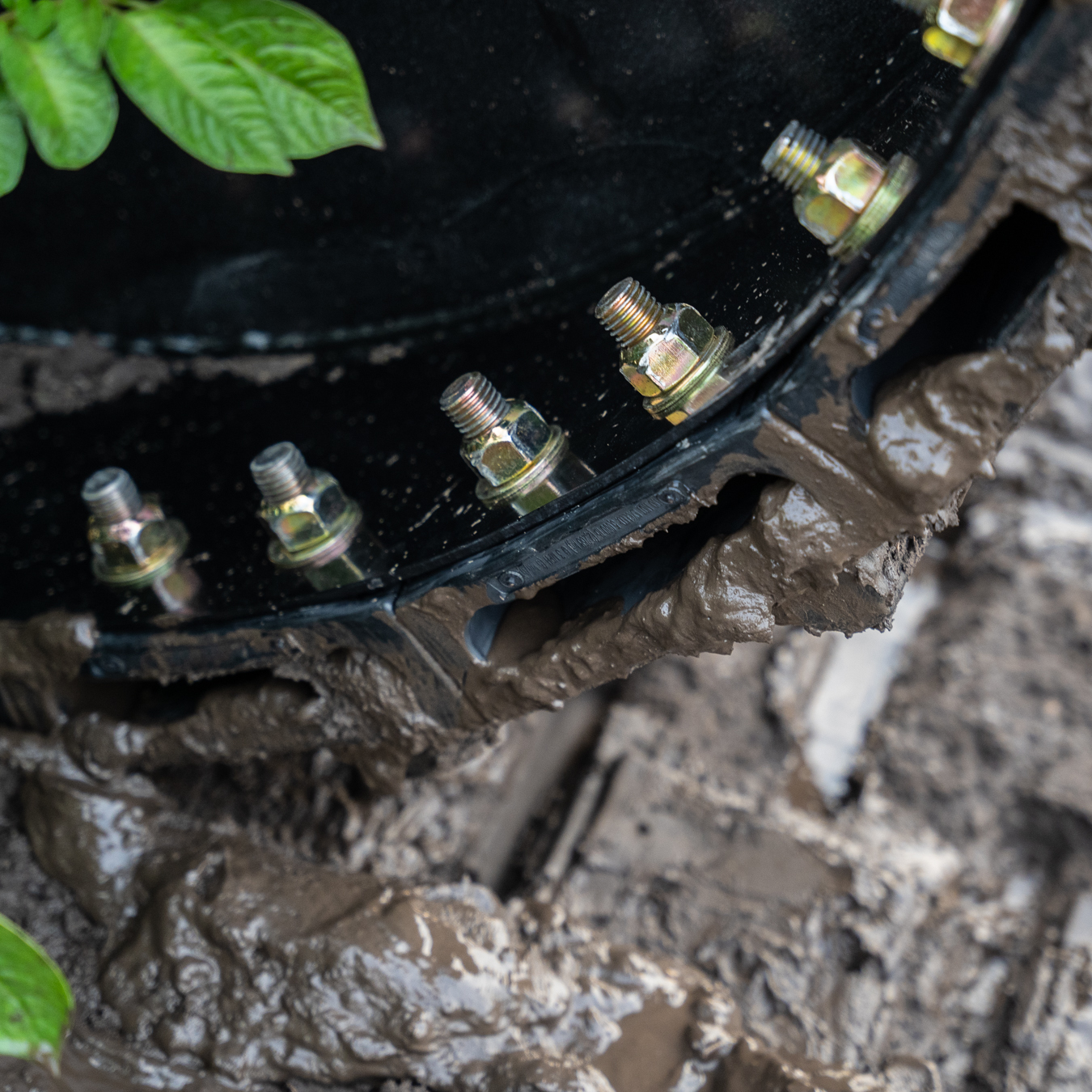
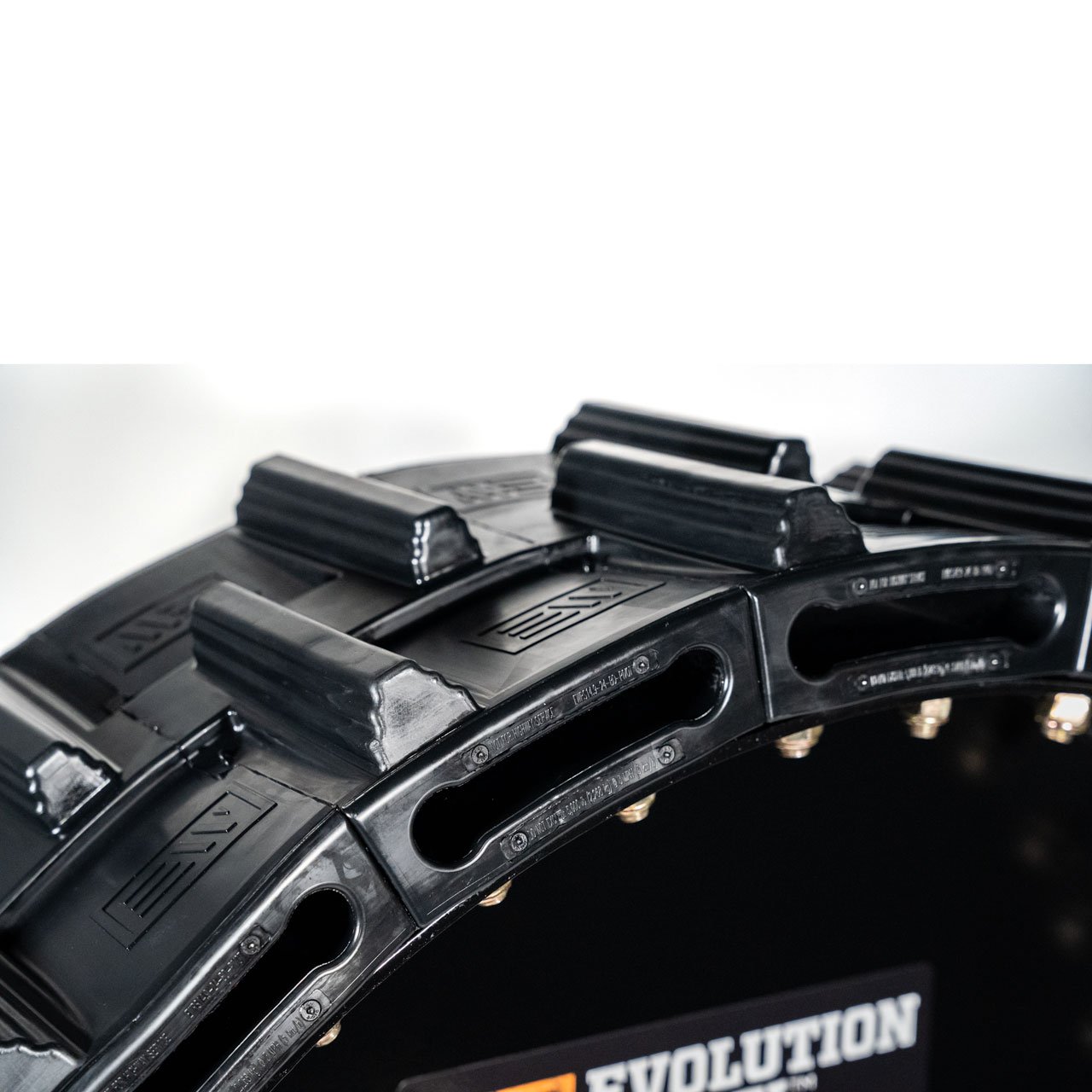
Even though the EWRS-PIVOT is an airless tire, it is designed to compress as a pneumatic would. Its unique core geometry compresses completely allowing the tire to flex and also push material out of the core holes making it a self-cleaning system. This along with its aggressive bi-directional tread design maximizes traction.
Serviceability
The tread pattern on any tire is highly important. Most irrigation tires have a directional tread pattern. This means that the lugs on the tire are angled in one direction and are often designed to dig down for its traction. This isn't a problem on most machines as they are not traveling the same route continuously. However, due to the stationary movement of a field sprinkler system, these tread patterns cause deep ruts.
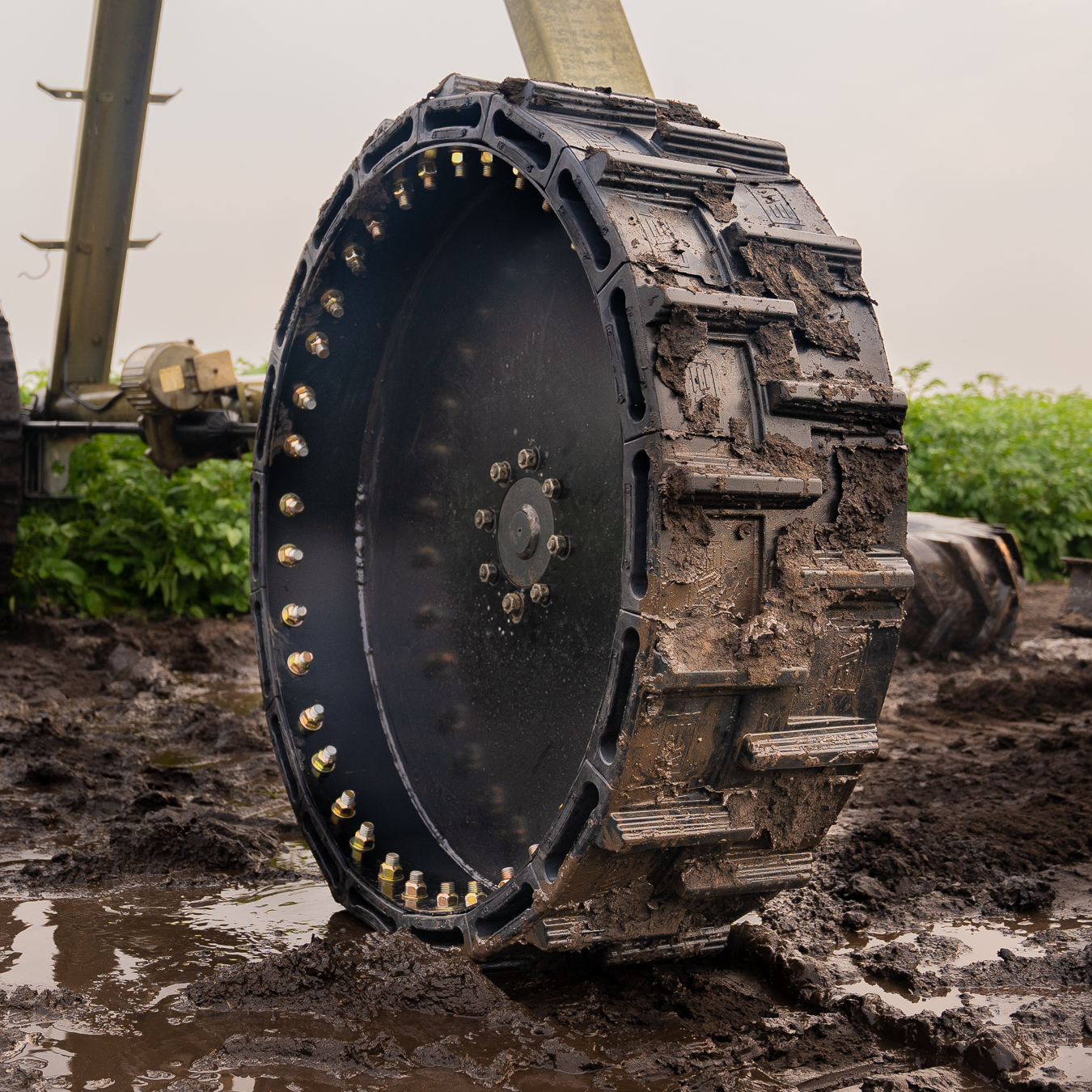
The EWRS-PIVOT features a bi-directional tread pattern that is designed not to displace dirt from underneath the tire. The EWRS-PIVOT also has a concave profile that holds mud underneath the tire as opposed to pushing it out to the side. Combining these two features minimizes ruts in your field.
Cost-Effective
Due to the longevity and the serviceability of our tires, our tires offer saves you money. A regular pneumatic tire is initially cheaper however when it goes flat will need to be replaced. A flat tire can damage your irrigation system demanding costly repairs, and the downtime that they create can affect crop yield and take up valuable labor costs. Using these tires you get rid of all these extra costs increasing your ROI.


EWRS-PIVOT SERIES
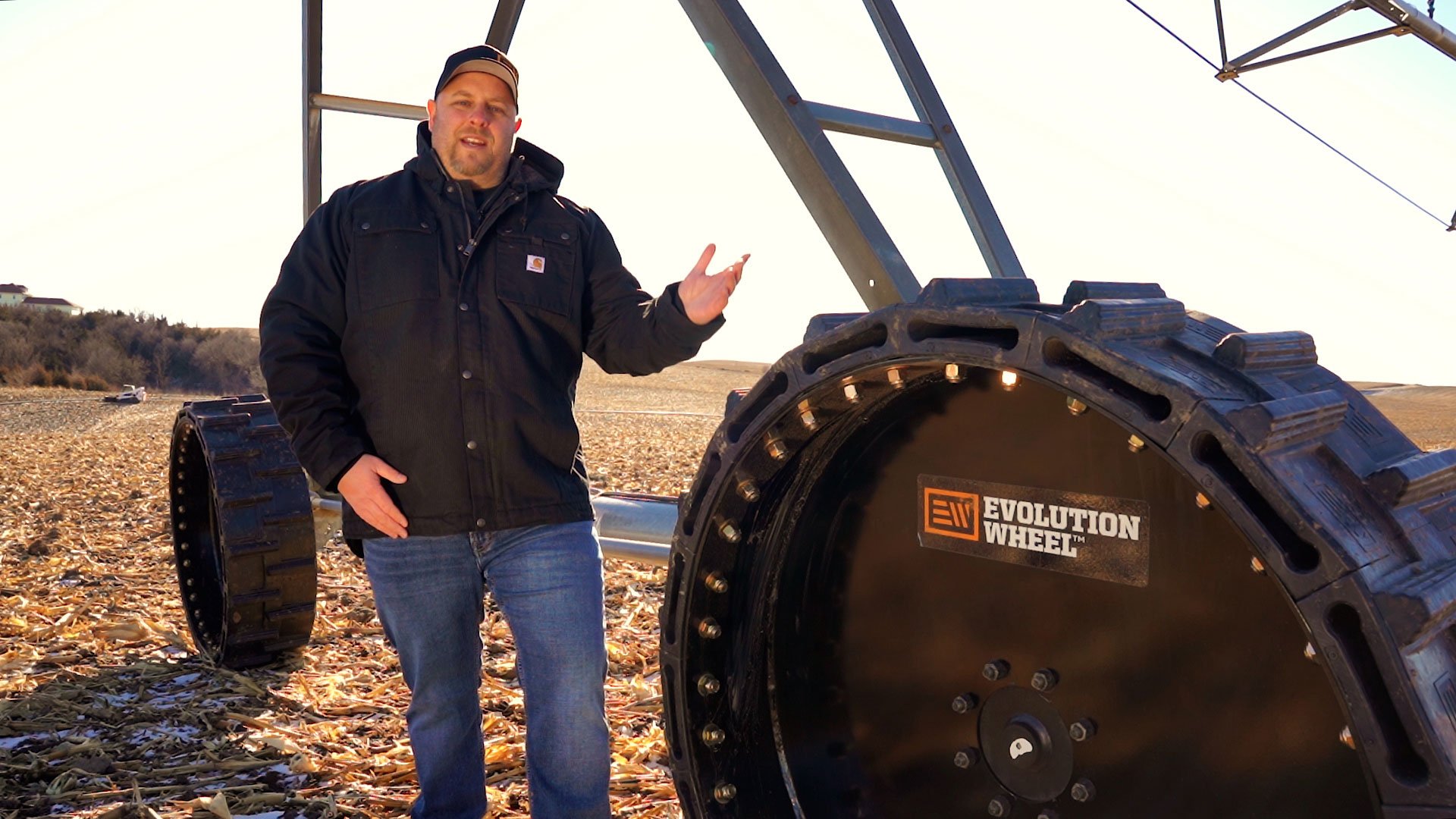
The EWRS-PIVOT series of airless pivot tires from Evolution Wheel offers the most advanced airless technology to the irrigation market. This solution delivers serviceability, traction, and floatation into one impressive offering.
Our tread design and tire profile offer greater traction through mud and obstacles. The unique concave contact face helps eliminate rutting by keeping dirt under the tire, where it belongs. The face of the tire is pointed inwards. Compared to typical pneumatic irrigation tires which convex shape push mud out from under the tire, causing ruts.
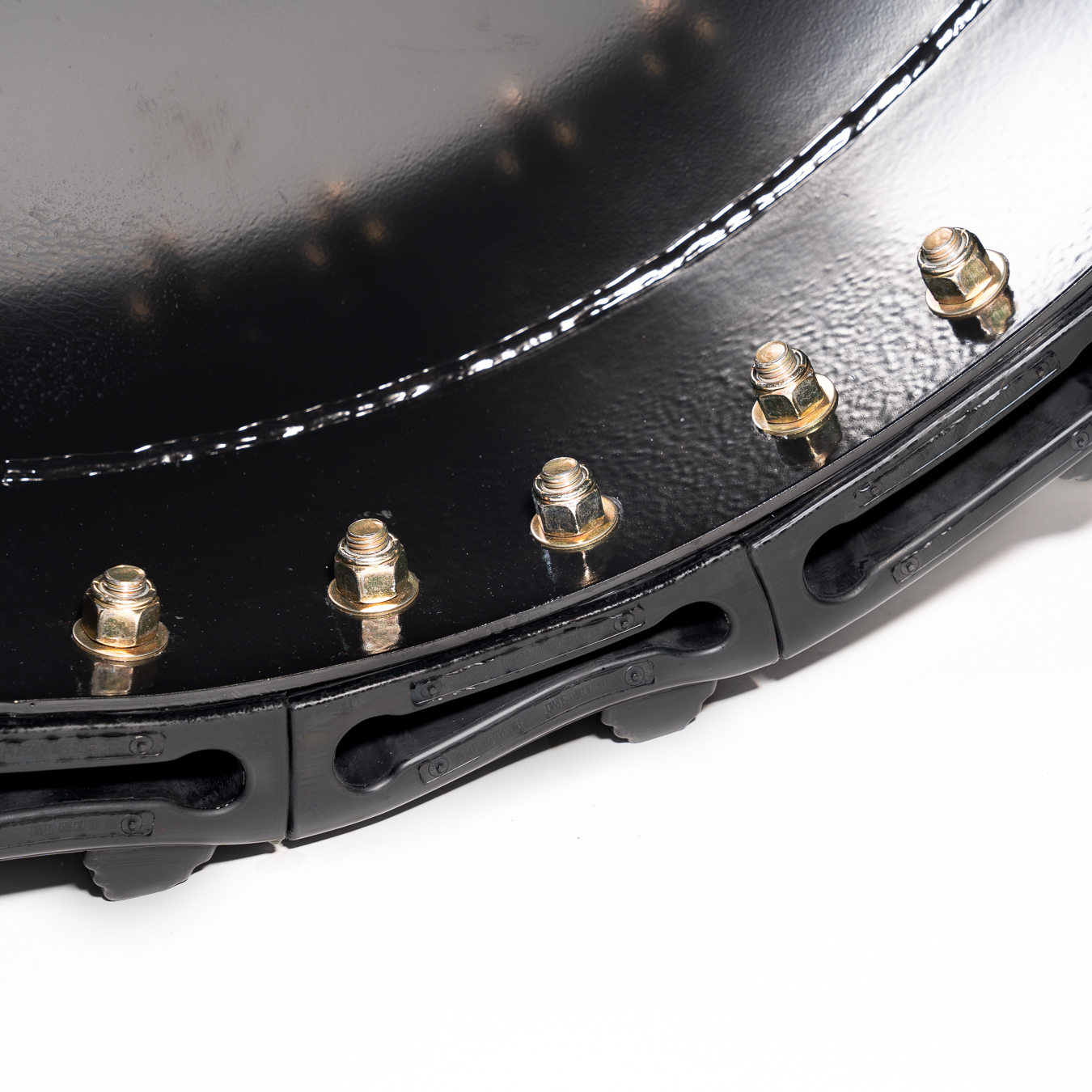
Our proprietary segmented design bolts onto our high strength wheel, allowing you the ability to service the tire quickly, eliminating the need to change a tire in the field.
Unlike other airless pivot tires, the EWRS-PIVOT compresses flat pushing material out, it's a self-cleaning system. The compressed cores elongate the footprint of the tire allowing it to wrap over obstacles increasing traction and reducing ground pressure.
Related Pages
If this page was informative, check these out:
